
Car loan into your mortgage: pros, cons and what it can cost in total interest
Thinking of rolling a car loan into your mortgage? Here's how it works, a worked example of the payment saved versus the interest paid, the costs, and when it can make sense.
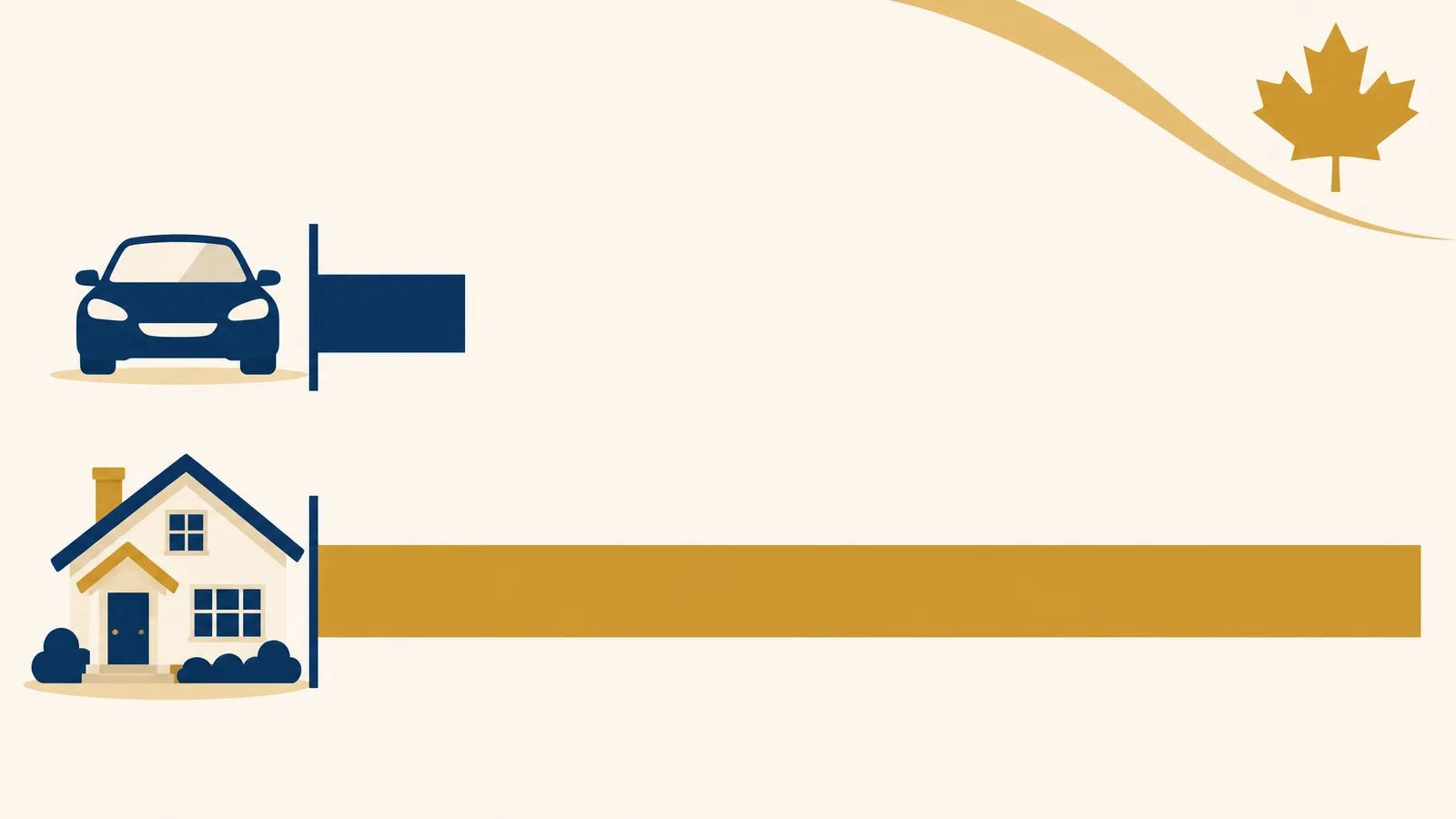
You can often roll a car loan into your mortgage by refinancing, which can lower your monthly payments but can also raise the total interest you pay. FCAC says consolidating may extend your repayment period and cost more in interest over time, and your home becomes the security. In the worked example, a $28,000 car loan at 7.99% costs about $4,805 in interest over 48 months, but about $18,492 if rolled into a 25-year mortgage at an assumed 4.50% and paid at the minimum. Fees and a mid-term prepayment penalty can erase the savings. OAC.
Key takeaways
- →Rolling a car loan into your mortgage usually means refinancing; you must qualify again, and mid-term you normally pay a prepayment penalty.
- →FCAC says consolidating may extend your repayment period and cost more in interest over time, and your home becomes the security.
- →In the example, a $28,000 car loan costs about $4,805 in interest over 48 months, but about $18,492 on a 25-year mortgage at the minimum payment (assumed rates).
- →It saves interest only if you keep paying the debt down quickly (check your prepayment privileges) or the refinance is happening anyway.
- →A licensed agent can compare options across 65+ lenders, OAC.
Short answer: You can often roll a car loan into your mortgage by refinancing, which can lower your monthly payments, but it can also increase what you pay in total. FCAC says consolidating higher-interest debts into a lower-interest product may save money, but it may extend your repayment period and cost more in interest over time [1]. A car loan is usually a short, fixed-payment debt, so stretching it over a 25-year amortization is the main risk. Your home also becomes the security for the money [2].
This guide is for homeowners who are weighing a refinance partly to pay off a car loan, and want the pros, cons and numbers before they decide. It's general information; lenders set their own policies, OAC.
How it works
You can't usually add a car loan to your mortgage on its own mid-term. In practice, you refinance: a new mortgage replaces your current one, and part of the new amount pays off the car loan. FCAC says you may usually borrow up to 80% of your home's value, and your lender may ask for an appraisal [2]. Because it's a new mortgage, you have to qualify again, including at the stress test rate at federally regulated lenders; see our stress test guide. A refinance at renewal avoids the penalty for breaking your mortgage; mid-term, FCAC says you normally pay a prepayment penalty that can cost thousands of dollars [3].
Weighing a refinance to pay off debt? Run your numbers first: debt consolidation calculator. A licensed 8Twelve agent can compare options across 65+ lenders, OAC.
Worked example: payment saved vs interest paid
Example (illustrative): you owe $28,000 on a car loan at 7.99% with 48 months left, which is about $683 a month and about $4,805 of interest over the rest of the loan. You refinance and roll the $28,000 into a mortgage at an assumed 4.50% with a 25-year amortization (semi-annual compounding). These rates are assumptions, not quotes.
| Scenario | Monthly effect | Interest on the $28,000 | Time to pay off |
|---|---|---|---|
| Keep the car loan | About $683 a month | About $4,805 | 48 months |
| Roll into the mortgage, pay the minimum | About $155 a month added to your mortgage payment | About $18,492 | 25 years (about $24,583 still owing after 5 years) |
| Roll in, then prepay $683 a month | About $155 plus $528 in prepayments | About $2,432 (before the fees below) | About 45 months |
The middle row is the trap: the payment drops by roughly $528 a month, but the total interest on the car debt is about $13,700 higher, because the debt now sits on a 25-year loan. The third row only works if your mortgage allows prepayments of that size, so check your prepayment privileges first; our prepayment privileges guide explains them. In every row, add the refinance costs: appraisal, title search, title insurance and legal fees, and possibly a new mortgage loan insurance premium [2], plus any prepayment penalty if you're mid-term [3].
Pros and cons
| Pros | Cons |
|---|---|
| Lower monthly payments and one payment instead of two | A short debt turns into a 25-year debt, which can raise total interest [1] |
| A mortgage rate is often lower than a car loan rate | Your home secures the debt; FCAC warns of serious consequences, including foreclosure, if you can't repay [2] |
| Frees up cash flow for other goals | Fees and a possible prepayment penalty can erase the savings [2][3] |
| Can simplify your finances [1] | The car loses value while the debt stays; you may still be paying for it after you sell the car |
Step by step: how to decide
- Get your car loan payout figure and rate, and your mortgage penalty if you're mid-term.
- Compare total cost, not just the payment over the time you'll actually keep the debt [1].
- Ask about prepayment privileges on the new mortgage so you can keep paying the debt down quickly.
- Time it with your renewal if it's close. See our debt consolidation mortgage guide.
- Get the costs in writing before you commit.
Alternatives
FCAC lists other ways to consolidate: personal loans, debt consolidation loans, home equity loans, personal lines of credit, HELOCs and credit card balance transfers [1]. If your credit is damaged, a consumer proposal or credit counselling may fit better; see our consolidation vs consumer proposal guide.
Consolidating a car loan into your mortgage lowers the payment but usually raises the total interest unless you keep paying the debt down fast. Do the math on the total cost, include the fees, and make sure the refinance has another good reason behind it.
This article is for general information only and isn't financial, legal or tax advice. Rates, products and terms change without notice and are available on approved credit (OAC). The rate and terms you qualify for depend on your individual financial situation, including credit, income, property and loan-to-value. "Best rates" means the most suitable options available for your situation, not a guarantee of the lowest rate. Examples are for illustration only, as of November 14, 2026, and are not an offer. 8Twelve Mortgage arranges mortgages through 65+ lenders and does not lend directly. Licensed across Canada — see our licences.
Consolidating unsecured debt into your mortgage may lower your monthly payment but can increase the total interest paid over the amortization period. FCAC statements were checked on November 14, 2026. The example uses assumed rates and amounts (car loan 7.99%, mortgage 4.50% with semi-annual compounding and a 25-year amortization), excludes refinance costs and taxes, and is not a quote.
Frequently asked questions
Sources
- Debt consolidation - FCAC
- Borrowing against home equity - FCAC
- Breaking your mortgage contract - FCAC
Last reviewed on November 15, 2026