Home Buyers' Plan: using your RRSP for a down payment
The Home Buyers' Plan lets first-time buyers withdraw up to $60,000 from their RRSPs. See who qualifies, how to withdraw and how the 15-year repayment works.
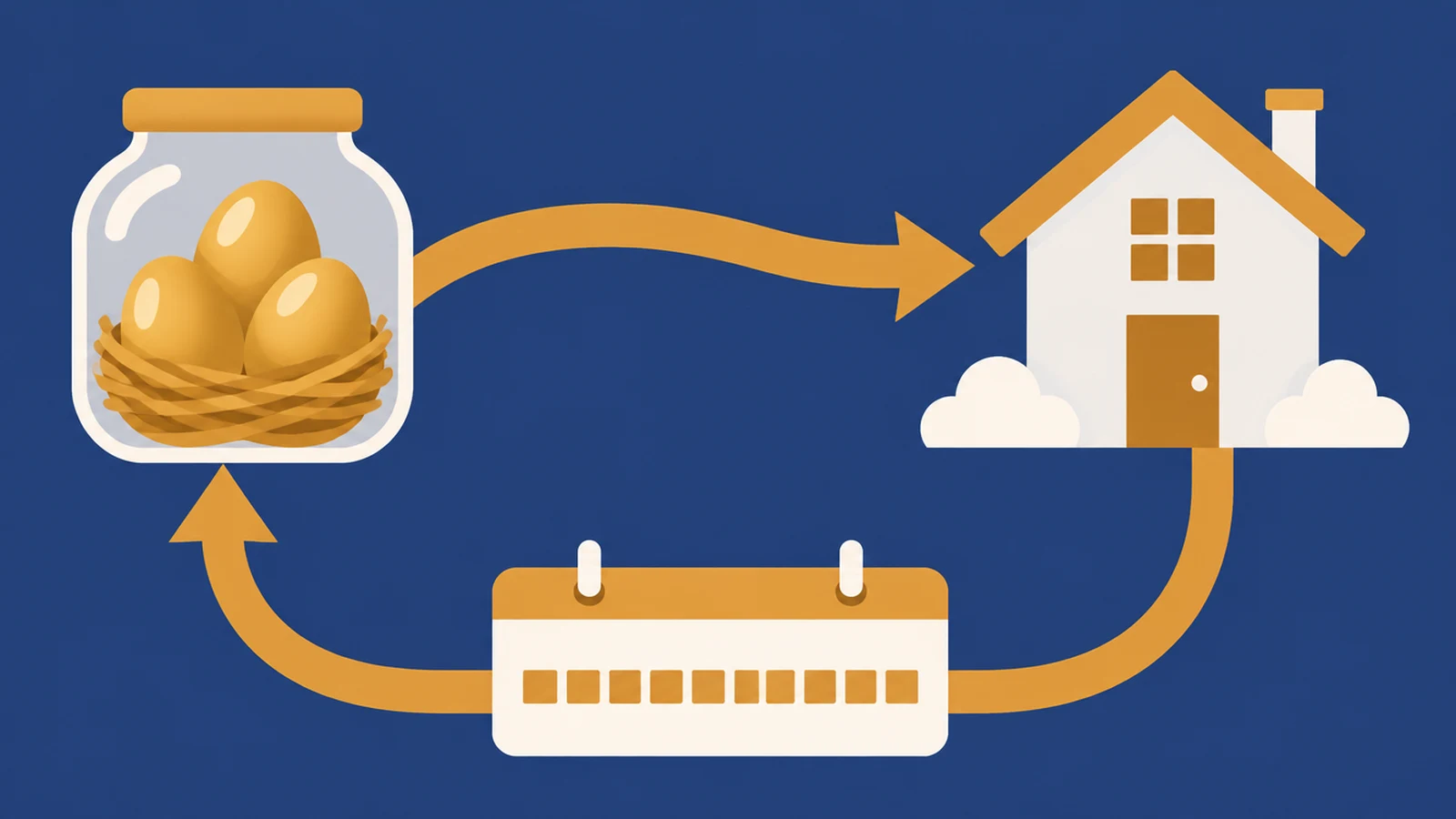
The Home Buyers' Plan lets eligible first-time buyers withdraw up to $60,000 from their RRSPs to buy or build a home. The CRA says you repay over 15 years, and for first withdrawals in 2026 to 2028 the repayment period starts in the fifth year after the withdrawal year. A pre-approval is not a written agreement to buy.
Key takeaways
- →The CRA says the HBP withdrawal limit is currently $60,000, and tax is not withheld on withdrawals of $60,000 or less.
- →You must be a first-time buyer with a written agreement to buy or build; a mortgage pre-approval does not count.
- →You repay over 15 years; for a first withdrawal in 2026, the first repayment year is 2031.
- →The minimum yearly repayment is your balance divided by the years remaining, so $60,000 means $4,000 a year (our arithmetic).
- →If you repay less than the minimum, the difference is added to your income. A licensed agent can plan your purchase across 65+ lenders, OAC.
Short answer: The Home Buyers' Plan (HBP) lets you withdraw from your RRSPs to buy or build a qualifying home, and the Canada Revenue Agency (CRA) says the withdrawal limit is currently $60,000 [1]. You repay the amount to your RRSP over 15 years, and for first withdrawals made from January 1, 2026 to December 31, 2028 the CRA says the repayment period starts in the fifth year after the year of the first withdrawal, so a 2026 withdrawal means your first repayment year is 2031 [1]. You must be a first-time home buyer and have a written agreement to buy or build, and a pre-approval does not count [2].
This guide covers who qualifies, how to withdraw, how repayment works and the mistakes to avoid. It is general information, not tax advice, OAC. Confirm your situation with the CRA or a tax professional.
What is the Home Buyers' Plan?
The CRA describes the HBP as a program that allows you to withdraw from your registered retirement savings plans (RRSPs) to buy or build a qualifying home for yourself or for a specified disabled person [1]. The RRSP issuer does not withhold tax on withdrawals of $60,000 or less [2]. You can withdraw from more than one RRSP as long as you are the annuitant of each, but some RRSPs, such as locked-in or group RRSPs, do not allow it [2]. The CRA also says you can make an HBP withdrawal and a qualifying first home savings account (FHSA) withdrawal for the same qualifying home if you meet the conditions at the time of each withdrawal [1].
Who qualifies?
| Condition | What the CRA says |
|---|---|
| First-time buyer | You did not live in a home you or your current spouse or common-law partner owned in the current calendar year before the withdrawal (except the 30 days before) or the preceding four calendar years |
| Written agreement | You need a written agreement to buy or build a home at the time of withdrawal; a pre-approved mortgage does not satisfy this |
| Residency | Resident of Canada at the time of withdrawal, and through the period until you acquire the home |
| Occupancy | You intend to occupy the home as your principal place of residence no later than one year after buying or building it |
| Timing | The home must be acquired or built before October 1 of the year after the year of your first withdrawal, with limited exceptions |
| Prior HBP use | If you used the HBP before, your HBP balance must be zero on January 1 of the withdrawal year |
Source: CRA [2]. There are exceptions, for example for a specified disabled person and for some separations, so check the full conditions. Qualifying homes include single-family homes, semi-detached homes, townhouses, condominium units and apartments in duplexes up to apartment buildings, and qualifying co-operative housing shares [2].
How the withdrawal works
You complete Form T1036 for each withdrawal and give it to your RRSP issuer [4]. The CRA says you may make multiple withdrawals, but only in the same calendar year as your first withdrawal and in January of the following year [4]. Amounts above $60,000 are reported as income and tax is withheld on the excess [4]. If you contributed to your RRSP during the 89 days before the HBP withdrawal, that contribution may not be deductible [2]. For help estimating the rest of your purchase costs, see closing costs in Ontario.
Thinking about using the HBP for your down payment? A licensed 8Twelve agent can show how it fits with your mortgage options across 65+ lenders, OAC. Run the payment calculator or contact us.
How repayment works
The CRA says you have up to 15 years to repay the amounts withdrawn to your RRSP, PRPP or SPP [3]. For first withdrawals between January 1, 2026 and December 31, 2028, the repayment period starts in the fifth year after the year of the first withdrawal [1]. To repay, you contribute to your RRSPs in the year the repayment is due or in the first 60 days of the next year, then designate the contribution as a repayment on Schedule 7 of your return [3].
| Illustration | $60,000 withdrawn | $40,000 withdrawn |
|---|---|---|
| Repayment period | 15 years | 15 years |
| Minimum repayment each year (balance divided by years remaining) | $4,000 | about $2,667 |
| First repayment year if first withdrawal is in 2026 | 2031 | 2031 |
The CRA says to calculate the minimum by dividing your HBP balance by the number of years remaining in your repayment period, and that repaying more than the minimum lowers later minimums [3]. The dollar figures are our arithmetic on assumed withdrawals, not a CRA statement for your situation. Your CRA statement of account shows the real amount.
If you repay less than required
The CRA says that if you repay less than the minimum for a year, you have to include the difference in your income for that year [3]. Repayments are made through RRSP contributions, and the CRA says you cannot claim as a deduction an amount you designated as a repayment [3].
Questions to ask before you withdraw
- Do I meet the first-time buyer definition, given any home my spouse or partner owned?
- Do I have a written agreement to buy or build before I withdraw?
- Can my RRSP issuer process the withdrawal in time, and is my RRSP locked in?
- Will I be able to repay on schedule, given the minimum each year?
- How does the withdrawal fit with other down payment sources, such as a family gift? See gifted down payment in Canada.
From our agents: the HBP timing rules are strict, so tell your mortgage agent early that you plan to use it. That way the withdrawal, your offer and your closing date can be lined up, OAC. Read minimum down payment in Canada to see how much you may need in total.
Frequently asked questions
How much can I withdraw under the Home Buyers' Plan?
The CRA says the withdrawal limit is currently $60,000. Amounts over $60,000 are reported as income.
How long do I have to repay the HBP?
Up to 15 years. For a first withdrawal between 2026 and 2028, the CRA says the repayment period starts in the fifth year after the year of the first withdrawal.
Does a mortgage pre-approval count as a written agreement?
No. The CRA says obtaining a pre-approved mortgage is not considered a written agreement to buy or build a home.
Can I use the HBP and an FHSA for the same home?
The CRA says you can make an HBP withdrawal and a qualifying FHSA withdrawal for the same qualifying home if you meet all the conditions at the time of each withdrawal.
What happens if I miss a repayment?
If you repay less than the required minimum, the CRA says the difference must be included in your income for that year.
For a wider view of buying your first home, read our first-time home buyer guide.
This article is for general information only and isn't financial, legal or tax advice. Rates, products and terms change without notice and are available on approved credit (OAC). The rate and terms you qualify for depend on your individual financial situation, including credit, income, property and loan-to-value. "Best rates" means the most suitable options available for your situation, not a guarantee of the lowest rate. Examples are for illustration only, as of November 25, 2026, and are not an offer. 8Twelve Mortgage arranges mortgages through 65+ lenders and does not lend directly. Licensed across Canada — see our licences.
This article is for general information only and isn't tax advice. The $60,000 limit, the FHSA note and the 2026-2028 repayment relief come from the CRA's Home Buyers' Plan page [1]; the eligibility conditions, the pre-approval note, tax withholding, eligible homes, the 89-day contribution note and the multiple-withdrawal timing come from the CRA's how to participate page [2]; the Form T1036 step, the withdrawal window and the excess-over-$60,000 rule come from the CRA's how to make withdrawals page [4]; the 15-year repayment, how to repay, the minimum repayment calculation and the shortfall rule come from the CRA's repayment page [3]. All were checked November 25, 2026 and CRA rules can change. The $4,000 and $2,667 figures are our arithmetic on assumed withdrawals. The "From our agents" tip is our general experience. Lending is available on approved credit (OAC).
Frequently asked questions
Sources
- The Home Buyers' Plan - Canada Revenue Agency
- How to participate in the Home Buyers' Plan - Canada Revenue Agency
- How to repay the amounts withdrawn from your RRSPs under the HBP - Canada Revenue Agency
- How to make withdrawals from your RRSPs under the Home Buyers' Plan - Canada Revenue Agency
Last reviewed on November 26, 2026