
Refinance to buy out a spouse: how to keep the home after separation
Want to keep the home after a separation? Here is how a refinance to buy out a spouse works in Canada: the 80% limit, insured buyout programs up to 95%, qualifying on one income, and the Ontario land transfer tax exemption.
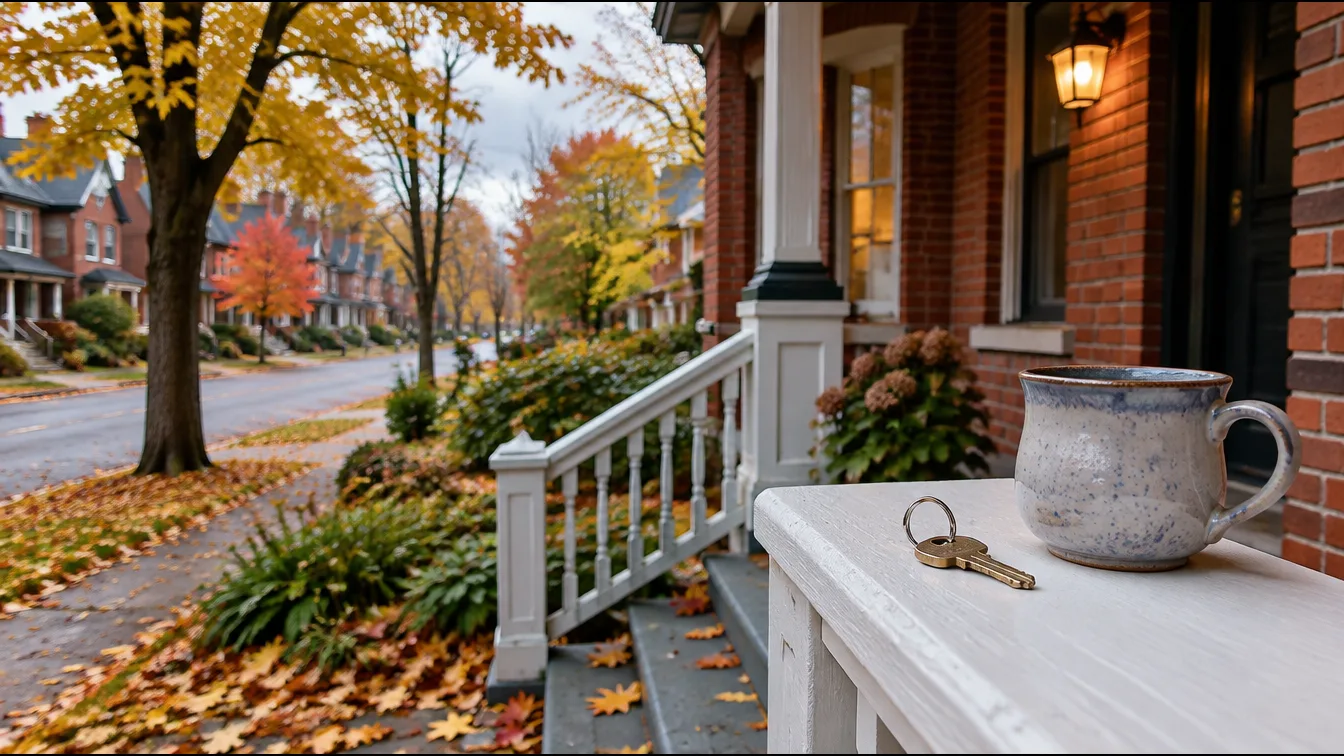
To refinance to buy out a spouse, the person keeping the home takes a new mortgage in their own name that pays off the joint mortgage and the departing spouse's agreed equity share. A conventional refinance is capped at 80% of value. Sagen and Canada Guaranty publish insured buyout rules that can treat the deal as a purchase up to 95% on eligible homes under $1.5 million, with an insurance premium. You qualify on your own income at the stress-test rate, and lenders need a signed separation agreement or court order with the buyout amount. In Ontario, transfers under a written separation agreement can be exempt from land transfer tax. OAC.
Key takeaways
- →A spousal buyout refinance pays off the joint mortgage and the departing spouse's equity share in one new mortgage in your name.
- →A conventional refinance tops out at 80% of appraised value; Sagen and Canada Guaranty can insure an equity buyout up to 95% on eligible homes under $1.5 million.
- →You qualify alone, at the higher of 5.25% or your contract rate plus 2 points, within lender debt-service limits.
- →Lenders need a signed separation agreement or court order stating the buyout amount, plus a current appraisal.
- →In Ontario, a transfer under a written separation agreement or court order can be exempt from land transfer tax. Get independent legal advice.
Short answer: To refinance to buy out a spouse in Canada, the person keeping the home takes a new mortgage big enough to pay off the existing mortgage and pay the departing spouse their share of the equity, then qualifies for it alone. A regular refinance is capped at 80% of the home's value [1]. Sagen and Canada Guaranty publish rules that can treat a buyout between owners already on title as a purchase, up to 95% of value on eligible homes [2][9]. Insured purchase rules generally apply only under the federal price cap (homes under $1.5 million) [3]. In Ontario, a transfer made under a written separation agreement can be exempt from land transfer tax [6][7].
This guide is for separating couples where one person wants to keep the home. It covers how much you can borrow, how lenders qualify you on one income, and the paperwork that keeps the file moving. It isn't legal advice: your separation agreement and your lawyer decide the split, and the mortgage is built around that. When you're ready to look at numbers, start a refinance application.
How a spousal buyout refinance works
Say you and your spouse own the home together with a joint mortgage. To keep it, you replace that mortgage with one in your name only. The new loan pays out three things on closing, through your lawyer:
- The existing mortgage balance (plus any prepayment penalty if you break it mid-term).
- Your spouse's equity payout, the amount set in your separation agreement or court order.
- Closing costs, such as legal fees and the appraisal, if the lender lets you roll them in.
Your spouse then comes off title and off the mortgage. Until a lender releases them, both of you stay liable for the full joint mortgage, so many lawyers like to see the refinance close at the same time as the title transfer.
How much can you borrow?
There are two routes, and the right one depends on how much equity is in the home.
| Feature | Conventional refinance | Insured equity buyout |
|---|---|---|
| Maximum loan | 80% of appraised value [1] | Up to 95% of value, treated as a purchase [2][9] |
| Home value limit | Set by lender | Under $1.5 million for insured mortgages [3] |
| Mortgage insurance premium | None | Yes, usually added to the loan |
| Who must be on title | You, as the remaining owner | Both owners currently on title [2] |
| Paperwork that fixes the payout | Separation agreement (lender requirement) | Agreement of purchase and sale, finalized separation agreement or court order [2] |
| Occupancy | Owner-occupied or rental, per lender | Your home (owner-occupied) |
Insurer and lender rules vary and change; each file is approved on its own facts, OAC.
Example 1, conventional (illustrative): home value $800,000; joint mortgage $380,000; equity $420,000; agreed buyout $210,000 (half). New mortgage needed = $380,000 + $210,000 = $590,000, or about 74% of value. That fits under the 80% cap of $640,000 [1].
Example 2, over 80% (illustrative): home value $700,000; mortgage $450,000; equity $250,000; buyout $125,000. New mortgage needed = $575,000, about 82% of value. That's over the 80% refinance limit of $560,000. If the file qualifies as an insured equity buyout under Sagen or Canada Guaranty rules, the purchase treatment can apply instead [2][9], and an insurance premium would be added.
Keeping the home after a separation? A licensed 8Twelve agent can check both routes across 65+ lenders on your income and equity, OAC. Start a refinance application
Qualifying on one income
The new mortgage is underwritten on your income alone. Two tests matter most:
- The stress test. Federally regulated lenders qualify uninsured borrowers at the higher of 5.25% or their contract rate plus 2 percentage points [4]. Insured files use the same qualifying-rate idea.
- Debt service ratios. Lenders compare your housing costs (GDS) and all debt payments (TDS) to your gross income. CMHC's insured limits are 39% GDS and 44% TDS [5]. See our GDS and TDS guide for the worksheet.
Using Example 1, a $590,000 mortgage over 25 years is about $3,197 a month at an assumed 4.29% contract rate, but you'd be qualified on roughly $3,877 a month at 6.29% (contract plus 2). Rates are illustrative assumptions as of November 7, 2026, not offers.
Support income: Canada Guaranty's published underwriting guidelines allow child or spousal support as qualifying income when it is expected to continue under a court order, separation agreement or divorce agreement, with recent tax or bank records confirming receipt; support you pay is included in the debt ratios [9]. Conventional (uninsured) lenders set their own rules, so ask before you finalize the agreement, OAC.
Paperwork lenders will ask for
- A signed separation agreement or court order that states who keeps the home and the exact buyout amount. Lenders generally won't fund against a draft [2].
- A current appraisal. The lender orders its own; if it comes in lower than the value in your agreement, the amount you can borrow drops.
- Your current mortgage statement, showing the balance, rate and maturity date.
- Income documents for you alone: pay stubs and employment letter, or two years of tax documents if you're self-employed.
- Proof of support received or paid, if any.
Ontario-specific points
Land transfer tax: Ontario exempts some transfers between spouses or former spouses, including a transfer made under a written agreement in which the parties agree to live separate and apart, or under a court order [6][7]. For this tax, "spouse" includes married couples and some common-law couples (three years' cohabitation, or a relationship of some permanence with a child) [6]. Your lawyer claims the exemption at registration.
The matrimonial home: under Ontario's Family Law Act, married spouses have special rights in the matrimonial home, including rules against selling or mortgaging it without the other spouse's consent [8]. Common-law partners are treated differently. Get independent legal advice on your situation before signing anything.
Other provinces have their own family property and land transfer rules; the mortgage steps are similar, but the legal side differs.
Step by step
- Get a pre-check on borrowing room before the agreement is final, using a recent value estimate.
- Agree the buyout figure with your lawyer and make sure it appears in the signed agreement.
- Check your current mortgage's penalty. Breaking it mid-term can cost thousands; see refinance costs in Canada.
- Apply with your income documents and let the lender order the appraisal.
- Close through your lawyer, who pays out the old mortgage and your spouse, registers the new mortgage and transfers title.
If the numbers don't work on one income
If you can't qualify alone, options can include a co-signer or guarantor, a longer amortization where available, changing the buyout terms, or selling and splitting the proceeds. Some people use short-term alternative lending as a bridge, but that costs more and needs a clear exit plan; see our guide to private mortgage exit strategies. For general refinance rules, read mortgage refinance requirements in Canada.
To refinance to buy out a spouse, line up three things: a signed agreement with a clear payout, a loan that fits the 80% limit or an insured buyout program, and income that passes the stress test on its own. Next step: start a refinance application and we'll map your options.
This article is for general information only and isn't financial, legal or tax advice. Rates, products and terms change without notice and are available on approved credit (OAC). The rate and terms you qualify for depend on your individual financial situation, including credit, income, property and loan-to-value. "Best rates" means the most suitable options available for your situation, not a guarantee of the lowest rate. Example rates and payments are for illustration only, as of November 2026, and are not an offer. 8Twelve Mortgage arranges mortgages through 65+ lenders and does not lend directly. Licensed across Canada — see our licences.
Examples use assumed home values, balances and rates with semi-annual compounding over 25 years. Insurer buyout rules are summarized from Sagen's published equity buyout policy and Canada Guaranty's March 2026 underwriting guidelines (Buyout of Coborrower's Interest); we have not found a matching public CMHC equity-buyout policy page. Department of Finance rules set the insured home-price cap. Ontario land transfer tax and Family Law Act points checked against ontario.ca on November 7, 2026. Get independent legal advice before signing a separation agreement. 8Twelve does not fund second or private mortgages; we arrange them with third-party lenders, and any lender or brokerage fees are disclosed in writing before you commit.
Frequently asked questions
Sources
- Borrowing against home equity - FCAC
- Lender Update: Equity Buy-out Policy (Feb 5, 2019) - Sagen
- Boldest mortgage reforms in decades come into force today (Dec 15, 2024) - Department of Finance Canada
- Minimum qualifying rate for uninsured mortgages - OSFI
- Calculating GDS / TDS - CMHC
- Frequently asked questions about land transfer tax (transfers between spouses) - Government of Ontario
- R.R.O. 1990, Reg. 696: Exemptions for certain transfers between spouses - Government of Ontario
- Family Law Act, R.S.O. 1990, c. F.3 (matrimonial home) - Government of Ontario
- Underwriting Guidelines (Mar 2026) — Buyout of Coborrower's Interest; Support Income - Canada Guaranty
Last reviewed on November 10, 2026