Is a reverse mortgage a good idea? 7 questions to ask first
Thinking about a reverse mortgage? Seven questions on cost, estate, payout, staying put and advice, with a worked growth table, to ask before you decide.
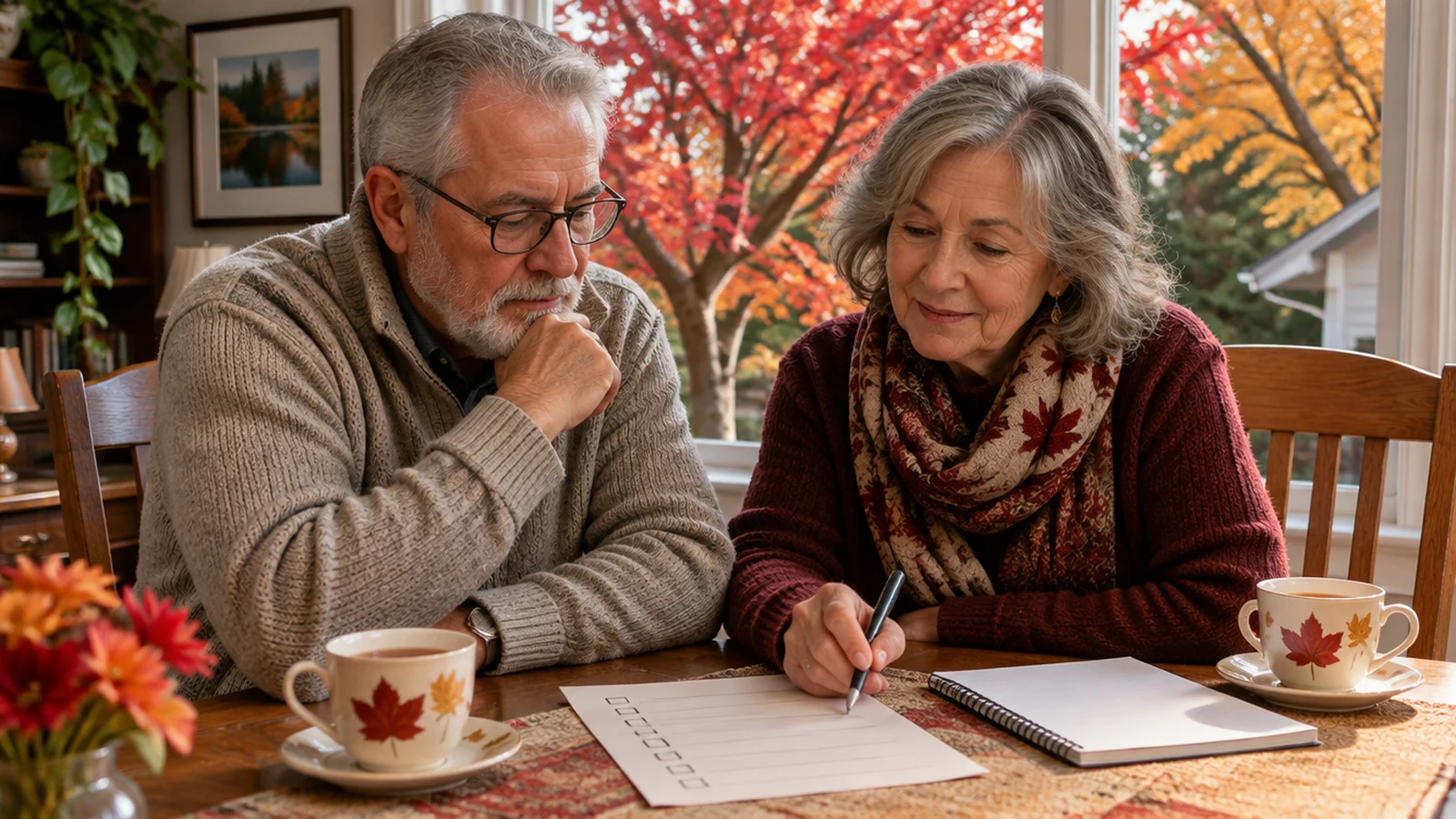
A reverse mortgage can fit homeowners 55+ who plan to stay for years and want cash without monthly payments, but FCAC says the rate is usually higher than a mortgage or HELOC and interest is added to the balance, so what you owe grows. In our assumed example, $100,000 at 7% reaches about $196,700 after 10 years. Compare alternatives, understand the payout options, talk to your family about the estate and get independent advice before deciding.
Key takeaways
- →FCAC says you may usually borrow up to about 55% of your home's value, and the money doesn't affect OAS or GIS.
- →The rate is usually higher than a mortgage or HELOC and interest is added to the balance, so the amount you owe grows.
- →In our assumed example, $100,000 at 7% grows to about $196,700 after 10 years, or about 28% of a $700,000 home.
- →Repayment is due when you sell, move out, the last borrower dies or you default, which affects your estate.
- →Compare alternatives and get independent advice first. A licensed agent can compare options across 65+ lenders, OAC.
Short answer: A reverse mortgage can be a good idea when you plan to stay in your home for years, have compared the alternatives and understand that the balance grows over time; it is a poor fit when you expect to move soon or want to leave the home's full value to your estate. The Financial Consumer Agency of Canada (FCAC) says you usually must be 55 or older, may borrow up to about 55% of your home's value, and that the interest rate is usually higher than a mortgage or a home equity line of credit (HELOC), with interest added to the amount you owe [1]. These seven questions help you decide.
This guide is a decision checklist, not a full pros and cons list; for that, see reverse mortgage pros and cons. Everything below is general information, OAC.
1. Have I compared the other options?
FCAC tells borrowers to shop around and compare other options before a reverse mortgage: selling and buying a smaller home, renting, assisted living, or another loan such as a HELOC, a mortgage or a personal loan [1]. Start with the two closest alternatives: a reverse mortgage vs a HELOC and a reverse mortgage vs downsizing. FCAC says a reverse mortgage's rate is usually higher than a HELOC's, while a reverse mortgage does not require regular payments [1]; a HELOC has its own qualifying rules and payments.
2. What will it cost over the years I stay?
FCAC says your lender adds your interest costs to the reverse mortgage, so the total you owe increases over time, and other costs can include an appraisal, set-up fees, legal fees, closing costs and prepayment penalties [1]. Here is how that can look on an assumed $100,000 borrowed at 7% on a $700,000 home. The rate is an assumption, not a quote, and we use simplified annual compounding. Figures are our calculation.
| Years after borrowing | Balance owed | Share of a $700,000 home | Equity left if the value stays flat |
|---|---|---|---|
| 5 | about $140,300 | 20.0% | about $559,700 |
| 10 | about $196,700 | 28.1% | about $503,300 |
| 15 | about $275,900 | 39.4% | about $424,100 |
Home values can rise or fall, so treat the last column as an illustration only. For actual fees and costs, see reverse mortgage costs in Canada.
Want to see numbers for your own home? A licensed 8Twelve agent can walk through the costs and your alternatives across 65+ lenders, OAC. See our reverse mortgage page.
3. How do I want to receive the money?
FCAC lists three ways: a lump sum for the whole amount, a lump sum for part with the rest over time, or regular payments [1]. A full lump sum means you pay interest on the whole amount from day one, which FCAC says can be an expensive way to borrow if you do not use it right away [1]. Taking more later may bring a fee and a change to the rate on the entire amount, and lenders may require a minimum up front (FCAC says typically around $25,000 for the partial option and around $20,000 for regular payments) [1].
4. What will it do to my estate and my family?
You must repay the balance when you sell, move out, the last borrower dies, or you default [1]. FCAC says your estate usually has a limited time to repay, that settling an estate can take longer than the time allowed, and that there may be less left to leave to beneficiaries [1]. Talk to your family before you sign. See what happens after death.
5. How long do I realistically plan to stay?
The primary residence rule usually means you live in the home at least six months a year [1], and moving out triggers repayment. If you might move to assisted living or closer to family within a few years, the set-up costs are spread over a short time. If you plan to age in place, they are spread over many years. See reverse mortgages and aging in place.
6. Can I meet the obligations?
FCAC says you can default by being dishonest on the application, using the money illegally, letting the home fall into disrepair that lowers its value, or breaking contract conditions, and the consequences can include foreclosure [1]. Property tax, insurance and upkeep typically remain your responsibility, so check your contract and your budget. Qualifying details are in reverse mortgage requirements in Canada.
7. Have I got independent advice?
FCAC suggests speaking with a financial advisor and your family, and says some provinces and territories require independent legal advice while others do not, though you may still want it [1]. A reverse mortgage can also limit other borrowing against your home, and you may need to pay off and close any existing mortgage or HELOC from the proceeds [1]. The money is generally tax-free and FCAC says it does not affect OAS or GIS; for the tax details, see reverse mortgage tax rules.
From our agents: the families who are happiest later are usually the ones who had the estate conversation before signing, not after. If you cannot answer questions 2, 4 and 5 with confidence yet, pause and compare again, OAC.
Quick scorecard
| If this describes you | A reverse mortgage may fit | Consider alternatives first |
|---|---|---|
| Plan to stay | 10+ years | Under 3 years |
| Monthly cash flow | Cannot take on a new payment | Could afford a HELOC payment |
| Estate goals | Flexible, family informed | Want to leave the home's full value |
| Home | Meets lender's rules, kept in good repair | Needs major repairs or is not your main home |
Frequently asked questions
Is a reverse mortgage a good idea?
It depends. It can suit homeowners 55+ who plan to stay and want cash without monthly payments, but the balance grows and your estate repays it. Compare alternatives first.
How much can I borrow?
FCAC says you may usually borrow up to 55% of your home's current value, depending on your age, the home and the lender. On a $700,000 home, 55% is $385,000, our arithmetic.
Does a reverse mortgage affect OAS or GIS?
FCAC says the money doesn't affect Old Age Security or Guaranteed Income Supplement benefits.
Do I need to make payments?
FCAC says you don't need to make regular payments, though your lender usually allows payments up to a maximum amount and you can repay in full at any time, possibly with a fee.
What happens if I move out?
The balance must be repaid when you sell, move out, the last borrower dies or you default.
See how much you could borrow before you decide.
This article is for general information only and isn't financial, legal or tax advice. Rates, products and terms change without notice and are available on approved credit (OAC). The rate and terms you qualify for depend on your individual financial situation, including credit, income, property and loan-to-value. "Best rates" means the most suitable options available for your situation, not a guarantee of the lowest rate. Examples are for illustration only, as of November 23, 2026, and are not an offer. 8Twelve Mortgage arranges mortgages through 65+ lenders and does not lend directly. Licensed across Canada — see our licences.
This article is for general information only. The eligibility, borrowing limit, costs, payout options, repayment triggers, default examples, alternatives, advice and OAS and GIS points come from FCAC's reverse mortgages page, checked November 21 to 22, 2026. The $100,000 borrowed at 7%, the $700,000 home and flat home value are assumptions for illustration, not quotes; balances use simplified annual compounding and the 55% of $700,000 figure is our arithmetic. The "From our agents" tip and the scorecard are our general experience. Lending is available on approved credit (OAC).
Frequently asked questions
Sources
- Reverse mortgages - FCAC
Last reviewed on November 24, 2026